Plant Life Cycle Vocabulary for Kids
Plant Life Cycle Vocabulary for Kids: Words and Activities begins with 15 useful terms that describe how a typical flowering plant develops and reproduces. Children learn these words best when they can see the stages, say what changes, and use each term in a short sentence. Start with seed, root, stem, leaf, and flower. Add terms such as germinate and disperse once your child understands the basic sequence. The activities below use pictures, movement, observation, and speaking, so they work for first-time learners as well as multilingual children.
📥 Plant Life Cycle Vocabulary Practice
Learn the stages, use the words in context, and track your recall throughout the week.
Leave your email — we'll send the PDF to your inbox.No spam — the PDF plus one short reminder. Unsubscribe anytime.
Core Words and Phrases
Teach the words as parts of one process, not as a spelling list. These 15 terms give children enough language to describe the main stages and plant parts:
Plant Life Cycle Vocabulary for Kids: Words and Activities should connect each noun to an action. A root grows down, a shoot grows up, a bud opens, and seeds spread. These short pairings make the words easier to use in speech.
How the Stages Fit Together
Dormancy may continue until water, air, and warmth are suitable. When growth starts, a root usually appears first. A shoot then grows upward, and the young seedling develops a stem and leaves.
As the plant matures, it may form buds and flowers. In flowering plants, pollen supports reproduction. A fruit can develop around those seeds, although the fruit may not look like the sweet fruits found in a kitchen.
Seeds can then disperse by wind, water, animals, or movement from the plant itself. Some reach a place where they can germinate. This return to the starting stage is why we call the process a life cycle.
Examples in Context
Plant Life Cycle Vocabulary for Kids: Words and Activities becomes more useful when children hear complete thoughts. Try sentences such as “The seed is under the soil,” “A small root is growing down,” “The seedling has two leaves,” and “The flower produces seeds.” Ask your child to point to the matching part in a picture.
Older children can link ideas with first, next, then, and finally: “First, the seed absorbs water. Next, it germinates. Then, the seedling grows leaves. Finally, the mature plant produces new seeds.” Accept a short correct answer before asking for more detail.
Activities for Different Ages
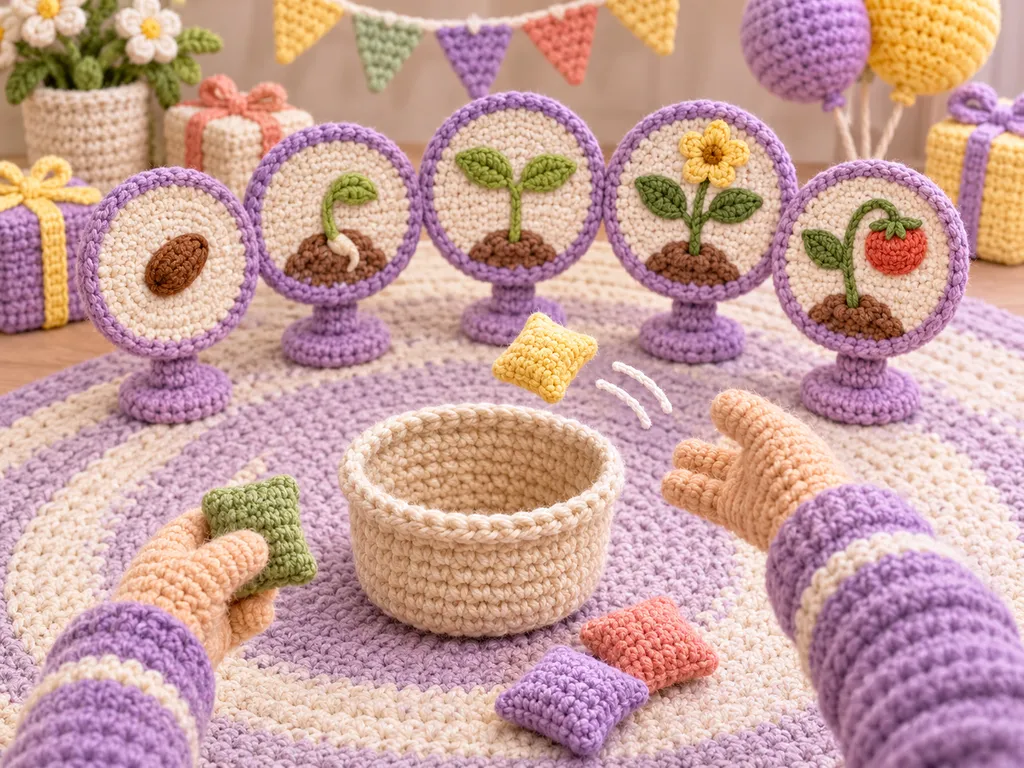
School-age kids: Draw four large pictures: seed, sprout, plant, and flower. Mix them and let your child place them in order. Say each word together, then act it out by curling into a “seed,” rising as a “shoot,” and opening both hands as a “flower.”
School-age kids: Put a store-bought bean beside damp paper in a clear container. Observe it without tasting it, and wash hands after handling the materials. Each day, your child can draw one change and complete a sentence such as “Today the root is longer.” Photos can replace the experiment if hands-on growing is not practical.
School-age kids: Ask your child to compare two plants or explain one cycle in six sentences. Plant Life Cycle Vocabulary for Kids: Words and Activities can also support a labelled diagram, a short presentation, or a discussion of dispersal by wind and animals.
Practice That Builds Recall
Keep practice brief and require your child to retrieve the word, not only repeat it. Cover the labels on a diagram and ask, “What is this part?” Later, reverse the task: say seedling and ask your child to draw or describe it. Revisit missed words after a gap.
Put the Cycle in Order
Write these words on separate cards: flower, seedling, seed, fruit, sprout. Ask your child to arrange them, explain each choice, and add one action word to every card. More than one starting point is acceptable because a cycle repeats.
Use Plant Life Cycle Vocabulary for Kids: Words and Activities during daily routines as well. Look at herbs, trees, vegetables, or houseplants and ask one focused question: “Can you find a bud?” or “Where might these seeds travel?” A home-language explanation can support the concept before your child gives the key word in English.
Correcting Common Mistakes
Some errors come from science concepts; others come from English forms. Correct the word inside a full sentence, then let your child say the sentence again. A brief model is usually clearer than a long grammar explanation.
Children may also say that every plant has flowers or fruit. Use “many flowering plants” instead. Keep the language accurate without crowding the lesson with exceptions. The main goal is to describe the observed plant and place its changes in a sensible order.
- Choose three plant life cycle words and define each with your child.
- Draw four stages and label each stage in the correct order.
- Read one plant book and correct mixed-up stage names together.
- Sort four picture cards, then explain why each stage comes next.
- Repeat the full sequence, correcting skipped stages and reversed vocabulary immediately.
When a word has several meanings or pronunciations, Cambridge Dictionary is a useful check before turning it into child-friendly examples.
Frequently Asked Questions
How Many Plant Life Cycle Words Should My Child Learn at Once?
Begin with four or five words: seed, root, stem, leaf, and flower. Add new terms when your child can recognise and use the first set. Younger learners may need several short sessions. Older learners can handle more words if they already understand the science behind the cycle.
Can My Child Use Another Language While Learning These Words?
Yes. A child can discuss the idea in a home language and then attach the English word to it. This is especially useful for multilingual learners who understand how a new plant begins to grow but do not yet know germinate or seedling. Ask for a short English sentence after the meaning is clear.
Does My Child Need to Grow a Real Plant?
No. Plant Life Cycle Vocabulary for Kids: Words and Activities can be taught with photographs, drawings, safe household foods, or plants seen outdoors. Growing one adds direct observation, but it is one option. A clear sequence of pictures can support the same vocabulary practice when space, weather, or time limits a planting activity.
How Often Should We Practise Plant Life Cycle Vocabulary?
Use three five-minute sessions across one week:
- On day 1, name five pictures and put the stages in order.
- On day 3, cover the labels and make one sentence for each picture.
- On day 7, revisit missed words while looking at a sprout, flower, fruit, or young plant.
Ask your child to explain the full cycle in four sentences before adding new terms.
A short one-to-one lesson can show what level and pace fit your child — book a trial English lesson.
Stay updated on our latest tips and resources by following us on Instagram LearnLink.