Habitat Vocabulary in English for Kids
Habitat Vocabulary in English for Kids: Words and Activities covers place words, descriptions, and sentence patterns children need to discuss where living things belong. A habitat provides a plant or animal with food, water, shelter, air, and space. Begin with forest, ocean, and nest, then introduce wetland, riverbank, and survive. Connect each word to an image, living thing, and usable sentence.
📥 Habitat Vocabulary Practice for Kids
Match, complete, sort, and correct habitat language
Leave your email — we'll send the PDF to your inbox.No spam — the PDF plus one short reminder. Unsubscribe anytime.
Core Habitat Words and Phrases
Separate three ideas. A habitat is the wider place meeting a living thing’s needs. A shelter is a protected place, such as a den or nest. A feature is part of the setting, such as sand, ice, soil, or deep water.
This table gives beginners a base and helps confident learners extend each word group.
Treat Habitat Vocabulary in English for Kids: Words and Activities as a flexible vocabulary collection. A young beginner might practise forest, tree, nest, and climb. An older child can discuss shelter, food sources, and adaptation from the same picture. Add frames: “It lives in…,” “It needs…,” “It hides under…,” and “This habitat is…”
Using Habitat Words in Context
Teach words through complete thoughts. “Desert” becomes memorable in “A cactus grows in a dry desert.” A pond picture can prompt “A frog can hide near the water” or “Insects live around the pond.” Keep early sentences short and ask what each sentence communicates.
Move from naming to explaining. A child may begin, “The fox lives in a forest.” Prompt with why, where, or how: “It finds shelter in a den,” “It moves between the trees,” or “Its habitat provides food and space.” Older learners can compare: “A pond is smaller and shallower than a lake.”
The aim of Habitat Vocabulary in English for Kids: Words and Activities is accurate communication, not a memorised answer. Animals may occupy several habitats. Encourage precise language: “Certain owls live in forests” instead of “All owls live in forests.” Precision develops vocabulary and sound reasoning.
Build a Habitat Sentence
Choose one habitat, living thing, need, and action. Join them: “A fish lives in the ocean, needs clean water, and swims to find food.” Change one part and decide whether the sentence still makes sense.
Activities for Different Ages
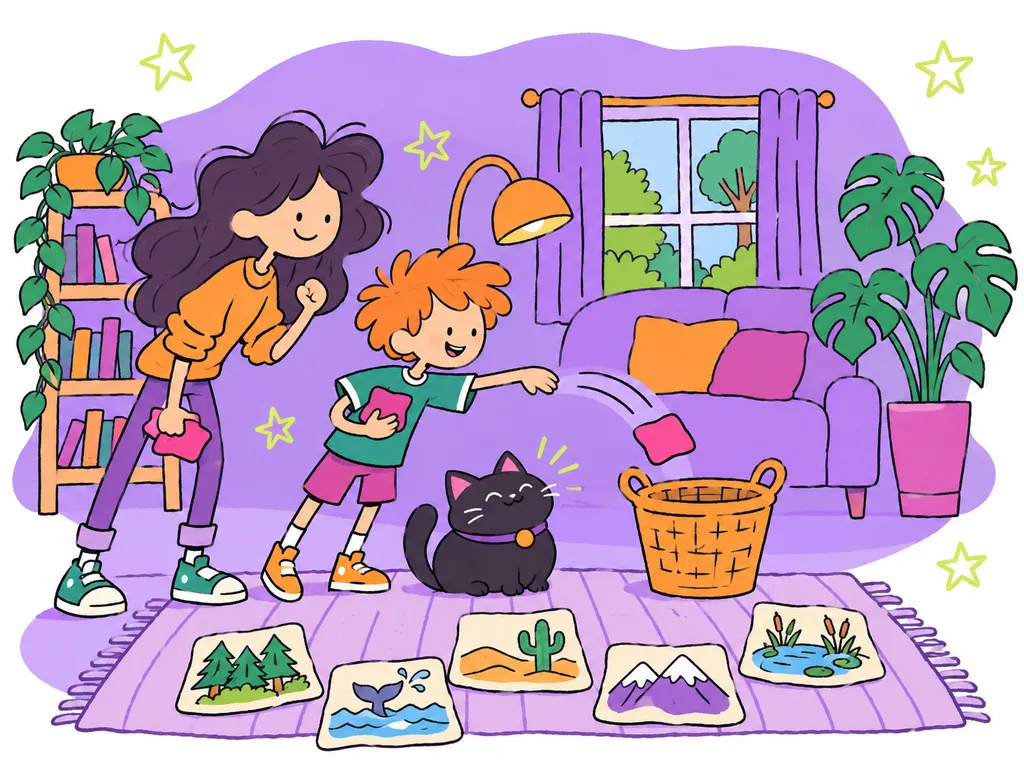
For school-age kids, use animal toys, drawings, or picture cards. Place forest, pond, desert, and ocean pictures on the floor. Your child matches each animal to a possible habitat and says: “Fish—ocean” or “The fish swims.” Accept pointing and single words before requesting a full sentence.
For school-age kids, ask your child to draw a habitat map. Label the ground, water, plants, shelters, and animals, then explain how two living things use the setting. Add an “odd one out” round: forest, tree, nest, ocean. Your child selects ocean and explains why the other words belong together.
For school-age kids, compare two habitats or examine an animal’s adaptations. Habitat Vocabulary in English for Kids: Words and Activities can support because, while, and unlike: “Unlike a desert, a wetland has waterlogged ground.” Mixed-age siblings can study one image while answering at different levels.
Simple Practice at Home and in Lessons
Use short recall rounds instead of repeating the full list. Show a picture and ask: “Where is it?”, “What lives there?”, and “What does it need?” Later, hide the labels and ask your child to retrieve the words. Drawing, acting, and sorting create several routes to meaning.
Picture books and nature videos provide examples. Pause before defining each new word so your child can notice a feature and guess. Ask, “Is this place wet or dry?” or “Where could the animal hide?” Confirm the word, then reuse it in a fresh sentence.
Across LearnLink lessons, our English tutors can adapt each task to a child’s speaking level. At home, multilingual families may compare habitat words across languages. Comparison strengthens English practice by connecting a new label to an understood concept.
Common Mistakes and How to Correct Them
Children may confuse habitat and shelter. A bird’s nest shelters eggs and young birds; its wider habitat may be a forest, grassland, wetland, or town. Ask, “What is around the nest?” The question shifts attention from one object to the full living environment.
Prepositions need practice. We say “in the forest,” “in the ocean,” “on the coast,” and “near a river.” Teach each phrase as one unit. If your child says “in the coast,” repeat the full model naturally: “Yes, the crab lives on the coast.”
Avoid presenting every picture match as a scientific rule. Animals move, habitats overlap, and related species may occupy different places. Use can, may, and often for non-universal statements. Correct the idea before the grammar: “Certain snakes live in deserts. Other snakes live in forests or wetlands.”
- Compare two habitat pictures and name three animals living in each one.
- Sort six animal cards by habitat, then explain every choice aloud.
- Correct one mismatched animal by asking, “Where does it actually live?”
- Read a familiar animal book and identify four habitat words together.
- Reuse corrected words in complete sentences: “A camel lives in the desert.”
When a word has several meanings or pronunciations, Cambridge Dictionary is a useful check before turning it into child-friendly examples.
Frequently Asked Questions
Which Habitat Words Should a Beginner Learn First?
Begin with forest, desert, ocean, river, pond, tree, water, nest, food, and shelter. Add hot, cold, wet, dry, live, swim, climb, and hide to build sentences. Habitat Vocabulary in English for Kids: Words and Activities works best when each noun comes with an action or describing word instead of an isolated label.
How Many Habitat Words Should My Child Learn at One Time?
Choose a small set your child can practise through pictures, movement, and sentences without strain. The amount depends on age, English level, and subject familiarity. Retain known words while adding a few new ones. If your child recognises a word but cannot use it, practise sentences before expanding the set.
Can Multilingual Children Learn Habitat Words in Several Languages?
Yes. Your child may compare the English word with known words, then return to an English sentence. The concept need not be relearned in each language. Keep the speaking goal explicit: during English practice, use “It lives in…” and “This habitat is…” while permitting brief comparisons that aid understanding.
How Can I Check Whether My Child Understands the Vocabulary?
Use a three-step check: ask your child to sort 6 unfamiliar pictures, explain 2 choices, and correct 1 silly match, such as a dolphin in a desert. Strong understanding means using a word in a new setting, not merely repeating its definition. Finish with one sentence about the habitat, its features, and a living thing’s needs.
Start your child's English journey today — book a trial lesson with LearnLink.
Stay updated on our latest tips and resources by following us on Instagram LearnLink.